The wall behind everything
A backwall is the large graphic surface behind a booth or a stage. It is what attendees see first and photograph most, so it carries the brand more than any other single element. Formats range from collapsible pop-up frames to smooth tension-fabric walls and rigid modular panel systems.
Pop-up backwalls expand from a folding frame with a magnetic fabric or mural skin and pack into a wheeled case. Tension-fabric walls stretch a printed graphic over an aluminum frame for a flat, smooth look. Modular panel walls add structure, shelves, and mounting for heavier needs.
Backdrops at the Rosen Centre Hotel
The Rosen Centre Hotel sits on International Drive next to the Orange County Convention Center, with around 100,000 square feet of meeting space and a large ballroom that hosts general sessions, exhibits, and sponsor events. In that mix, backwalls do double duty: booth surrounds in exhibit areas and step-and-repeat backdrops for stages and photo moments.
Because a connected I-Drive hotel like the Rosen Centre runs sessions and exhibits in the same footprint, a portable tension-fabric backdrop is often the fastest way to brand a stage, a registration wall, or a sponsor backdrop between turnovers.
Choosing pop-up, tension, or modular
Pop-up backwalls win on speed and portability: they set up in minutes by hand and travel as a case, which suits fly-in teams and 10x10 or 10x20 inline booths. Tension-fabric walls give the cleanest smooth graphic and swap skins easily for new events.
Modular backwalls are the choice when the surround needs to carry weight, shelving, monitors, or a connected counter, or when it is part of a larger reconfigurable system. They install with a bit more labor but offer the most flexibility across footprints.
- Pop-up: fastest setup, packs in a case, ideal for inline booths.
- Tension fabric: smooth graphic, swappable skins for reuse.
- Modular: carries shelves, monitors, and counters; most flexible.
- Step-and-repeat backdrops brand stages and photo moments.
Graphics, finish, and install
Backwall graphics are large and seen up close, so resolution, color accuracy, and seam handling matter. Tension fabric hides seams best; pop-up murals can show panel edges if the art is not built for the frame. Building the file to the exact hardware avoids visible gaps and misalignment.
Most pop-up and tension backwalls need no labor call and no rigging, which keeps them practical for quick Orlando installs. Larger modular backwalls and any hung backdrop follow the show manual and Florida's open-market labor rules for crews and rigging.
Backwalls as the anchor of the booth
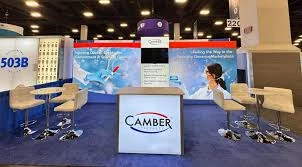
On an inline booth, the backwall is the booth: it carries the message, the lighting, and the brand color. Pairing it with a counter and a banner or two completes a clean, professional 10x10 or 10x20 without a custom build.
On larger stands and stages, the backdrop anchors the space while islands, demos, and AV build around it. Either way, getting the backwall right is the highest-leverage display decision an Orlando exhibitor makes.